

San Giovanni in Fiore: The Hometown That Never Really Becomes Far Away

There are people who left San Giovanni in Fiore fifty or sixty years ago and still call it home.
They built lives in America, Canada, Argentina, Australia, Germany, Switzerland, France and many other parts of the world. They found jobs, raised children, bought homes and watched their grandchildren grow up speaking another language.
Yet somewhere in their lives, San Giovanni in Fiore remained.
It survived in a family photograph, in a Calabrian expression spoken at the dinner table, in the name of a relative, in a recipe, in a telephone call home and in the memories repeated so many times that even children born thousands of miles away learned to recognize places they had never seen.
For the Sangiovannesi who emigrated, distance was never quite enough to erase belonging.
The Day They Left San Giovanni in Fiore
For many families, the story began with a departure.
A suitcase was packed. Goodbyes were said. Someone closed the door of a house without knowing when — or whether — they would open it again.
Leaving San Giovanni in Fiore meant leaving much more than a town.
It meant leaving the mountains of the Sila, familiar streets, relatives living only a few doors away, the sound of bells, winter cold, summer evenings, Sunday lunches and a community where almost everyone knew who you were and which family you belonged to.
Then came the journey.
For some, the destination was the United States. For others, Canada, South America, Australia or northern Europe.
Many arrived with little more than courage, the willingness to work and the hope that their children would have opportunities they themselves had never had.
They became workers, craftsmen, builders, shopkeepers, professionals and business owners.
They became Americans, Canadians, Australians, Argentines, Germans, Swiss.
But many never stopped being Sangiovannesi.
A Town Carried Across the Ocean
San Giovanni in Fiore traveled with them.
It entered apartments in New York and houses in Toronto. It reached families in South America and Australia. It settled wherever a Sangiovannese family created a new home.
The town lived around the kitchen table.
It lived in homemade pasta, preserves, Christmas and Easter traditions, family gatherings and stories beginning with words such as:
“When we were in San Giovanni…”
Children listened.
Grandchildren listened.
And without realizing it, another generation inherited a town.
Perhaps they could not locate it precisely on a map. Perhaps they did not speak Italian, much less the local dialect. Perhaps they had never walked through its streets.
But they knew its name.
San Giovanni in Fiore.
And they knew that somewhere in that mountain town was the beginning of their family’s story.
To the Children and Grandchildren Who Have Never Been Here
If your parents, grandparents or great-grandparents came from San Giovanni in Fiore, come and see it at least once.
Do not come only as a tourist.
Come with questions.
Ask your family, before leaving, where the old house was. Ask for names, nicknames, neighborhoods, churches and family stories.
Bring old photographs with you.
Then walk.
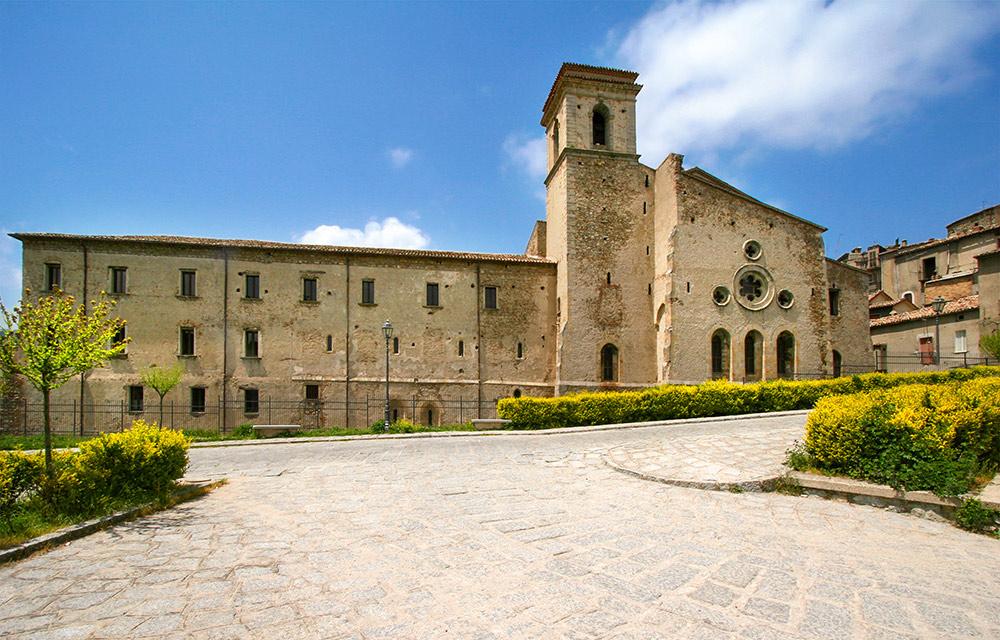
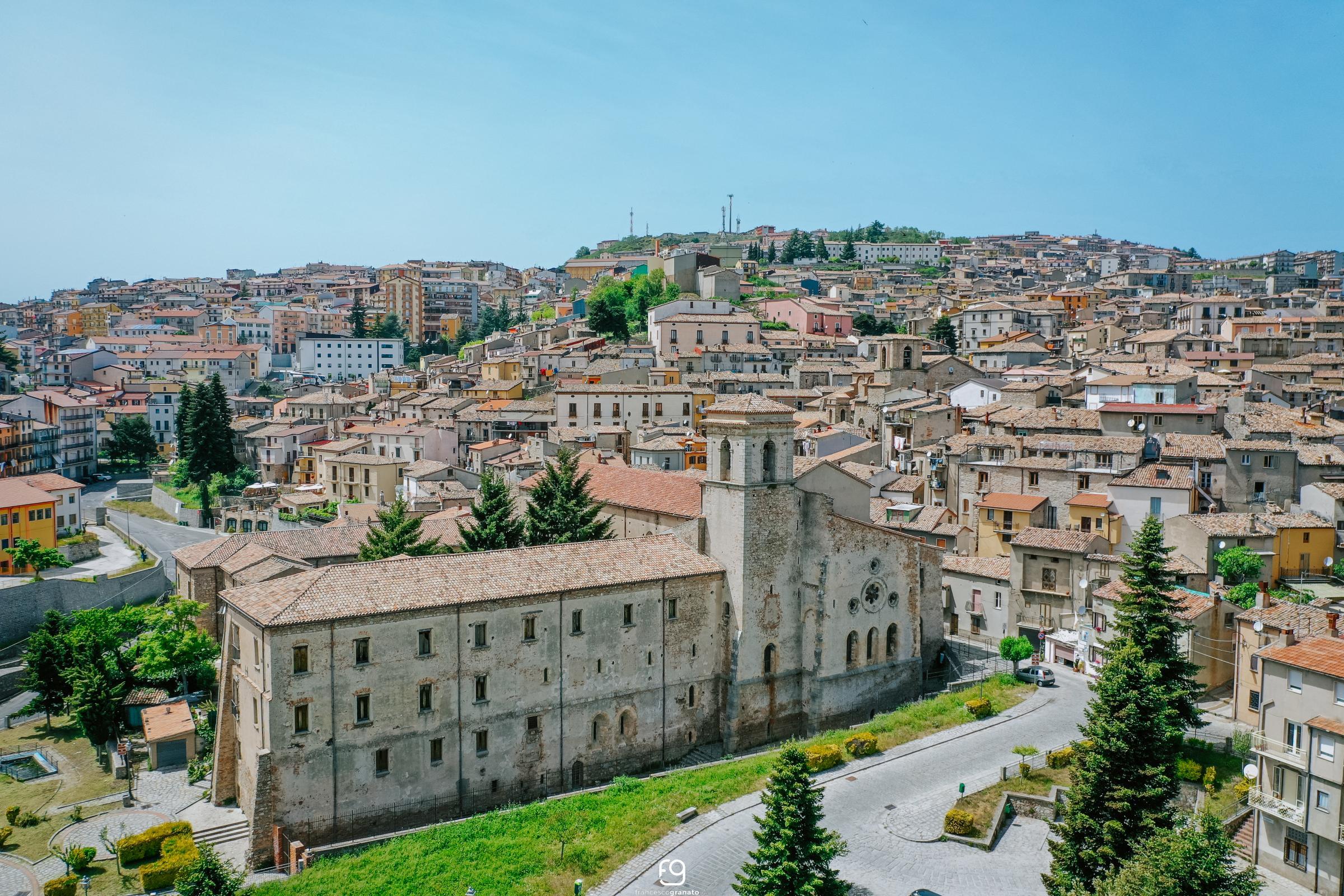
Walk through the historic center. Look at the old houses and narrow streets. Visit the Florense Abbey, one of the great symbols of San Giovanni in Fiore and of the extraordinary spiritual and intellectual legacy associated with Joachim of Fiore.
Then look beyond the town.
There is the Sila.
Those forests and mountains formed the landscape your ancestors knew. They saw winter snow, walked through cold mountain air and knew a Calabria very different from the coastal image familiar to many visitors.
Stand there for a moment and think about something simple:
Someone in your family once looked at this same landscape.
Perhaps a grandfather.
Perhaps a great-grandmother.
Perhaps someone whose face survives only in an old photograph.
Suddenly genealogy becomes something more than names and dates.
It becomes a place.
Ask for Your Family Name
In San Giovanni in Fiore, family histories can travel surprisingly far through memory.
Tell someone your surname.
Tell them the name of your grandfather.
Mention an old family nickname if you know it.
You may hear:
“I know that family.”
Perhaps somebody remembers the house. Perhaps they remember a relative. Perhaps one story leads to another person, another street, another branch of the family.
Not every search will end with a discovery.
The town has changed. People have moved away. Old houses have disappeared or passed to other families. Memories fade.
But searching still matters.
Because finding your roots does not necessarily mean finding a building exactly as it once was.
Sometimes it means simply standing on the street from which your family began its journey.
To Those Who Come Back Every Summer
There is another San Giovanni in Fiore.
It appears every summer when cars with foreign license plates arrive, houses closed for much of the year reopen and familiar faces return.
For many emigrants, coming back has become a ritual repeated throughout a lifetime.
They return older.
Then they return with their children.
Later, perhaps, with their grandchildren.
The town welcomes them differently each time because both the town and the people have changed.
The first return may be filled with excitement.
Later returns become quieter.
One notices the shutters that remain closed. The friend who is no longer sitting in the usual place. The relative whose voice is missing from the house. The shop that has disappeared.
This is one of the most difficult truths of returning home:
the place preserved in memory does not age, but the real place does.
And still they return.
Because sometimes returning is not about finding everything exactly as it was.
It is about finding enough to remember who you were.
Keep the Sangiovannese Dialect Alive
Language is one of the first things emigration changes.
The grandparents speak dialect.
The children understand it but answer in English, French, German or Spanish.
The grandchildren recognize only a few words.
And then, one day, nobody remembers them.
Do not let every word disappear.
Record the voices of older relatives.
Ask them to tell stories in the dialect they spoke as children.
Ask about expressions that cannot be translated properly into English.
Ask them what things were called at home.
Do not correct them. Do not interrupt them.
Let them speak.
Their voices contain something no history book can preserve: the sound of a San Giovanni in Fiore that may no longer exist in exactly the same way.
Open the Old Boxes
Almost every emigrant family has one.
A box. A drawer. An album. An envelope.
Inside may be photographs, letters, documents, passports, postcards, certificates and names written on the back of pictures.
Open them.
Do it while someone can still explain what you are looking at.
Ask:
“Who is this?”
“Where was this house?”
“Who sent this letter?”
“Why did he leave?”
“When did she return?”
Write the answers down.
Scan the photographs.
Save the letters.
Create a digital family archive and share it with younger relatives.
The history of emigration is not made only of statistics and passenger lists.
It is made of individual lives.
And every Sangiovannese family that preserves its own story preserves a small piece of the history of San Giovanni in Fiore.
Tell the Children Why Their Ancestors Left
Do not tell only the beautiful part.
Tell them that emigration could be painful.
Tell them about separation.
About parents who watched their children leave.
About husbands who went abroad first and families reunited years later.
About letters that took weeks to arrive.
About people who worked exhausting jobs because returning home defeated was not an option.
But tell them something else as well.
Tell them what those men and women achieved.
A child or grandchild living comfortably today in America, Canada, Australia or elsewhere may owe part of that life to a young Calabrian who once left San Giovanni in Fiore carrying very little.
That story deserves to be remembered.
Not because descendants must live in the past.
But because knowing the price paid by previous generations gives a different meaning to the life that followed.
Come Back, Even If You Have Never Been Here
This invitation is especially for those who say:
“My grandparents were from San Giovanni in Fiore, but I’ve never been there.”
Come.
Come at least once.
Walk through the town without rushing. Visit the places your family spoke about. Sit in a café. Listen to people talking. Look at the mountains surrounding you.
And if you know where the old family home was, go there.
You do not need to enter.
Stand outside for a moment.
Take a photograph.
Send it to your father, your mother or your grandparents if they are still alive.
Ask them:
“Is this the place?”
A simple photograph can sometimes cross an ocean more powerfully than words.
San Giovanni in Fiore Is More Than a Place on a Birth Certificate
For thousands of descendants around the world, San Giovanni in Fiore may appear only on an old document.
Place of birth: San Giovanni in Fiore, Cosenza, Italy.
But behind that line lies an entire landscape.
The Sila.
The Florense Abbey.
The streets of the historic center.
Winter snow.
Family homes.
Churches and traditions.
Departures and returns.
Generations of people who carried the name of their hometown far beyond Calabria.
That is why the relationship between San Giovanni in Fiore and its emigrants should never be considered a story that belongs only to the past.
It continues through their descendants.
Every time someone asks where a grandfather was born, the story begins again.
Every time an old photograph is identified, something is saved.
Every time a child learns the name San Giovanni in Fiore, another thread survives.
And every time someone returns — after one year, twenty years, fifty years, or for the very first time — the distance becomes a little smaller.
Because miles can measure how far San Giovanni in Fiore is from New York, Toronto, Buenos Aires, Melbourne or any other city in the world.
But there is no unit of measurement for the distance between a person and the place where their family’s story began.
For some, San Giovanni in Fiore is the town they left.
For others, it is the town they return to every summer.
And for thousands of descendants who have never seen it, it may simply be a name heard since childhood.
But sometimes a name is enough to begin the journey home.






0 Commenti